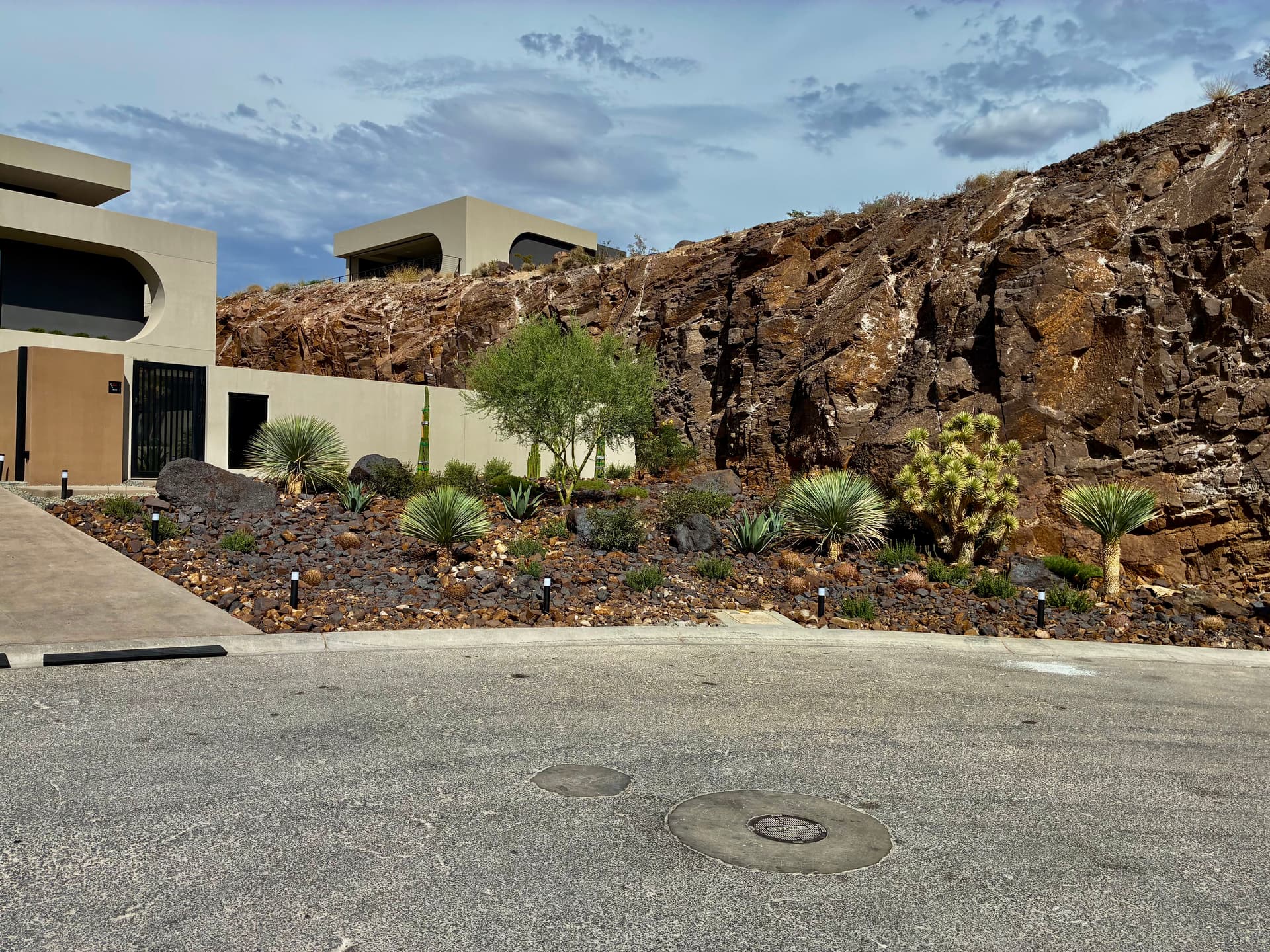
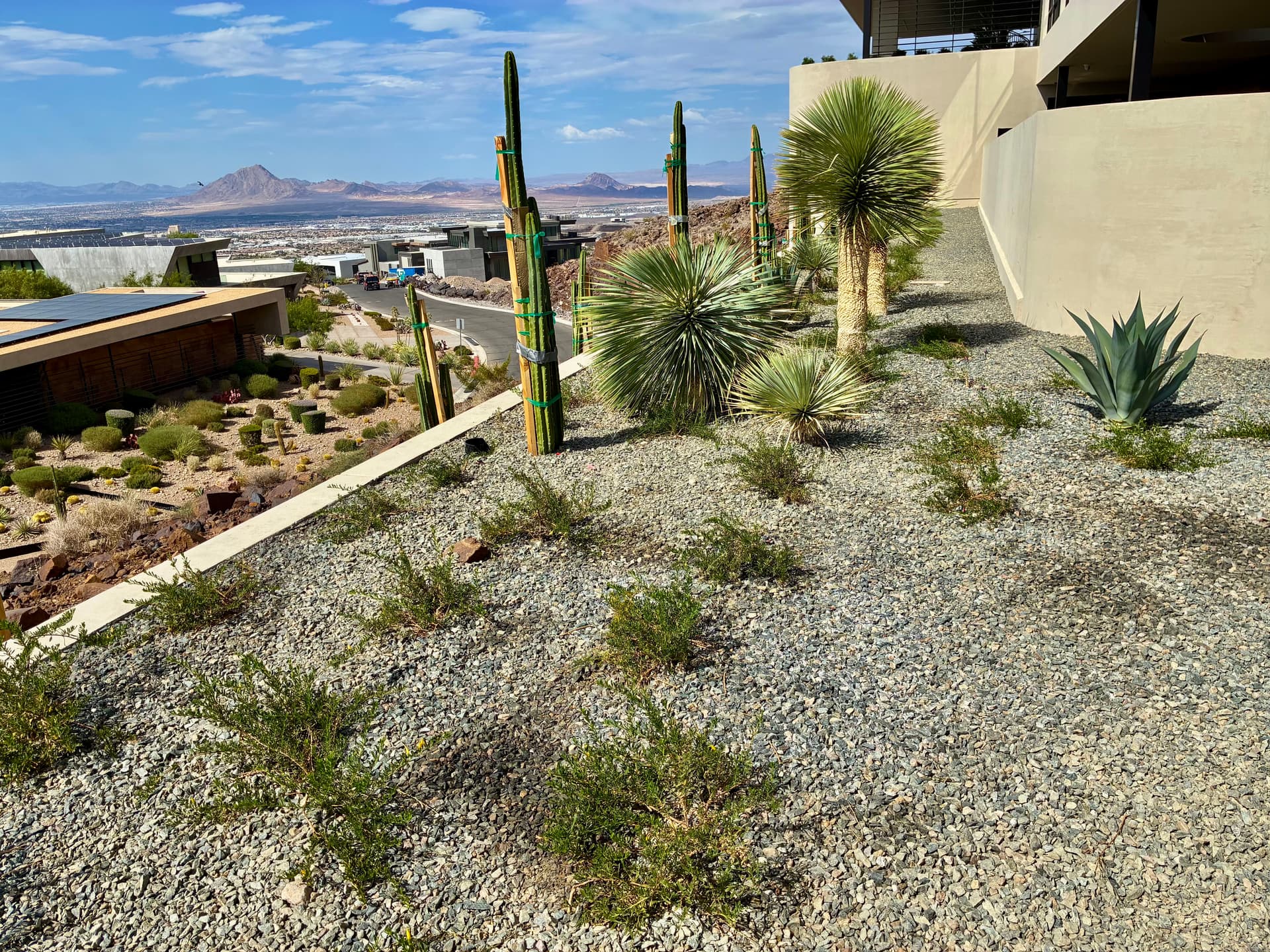
MacDonald Highlands homes sit against some seriously dramatic terrain - raw volcanic rock, steep grades, and sweeping views of the valley below. That kind of setting demands a landscape that matches it. Cookie-cutter just doesn't cut it up here. What works in a flat suburban yard has no place on a hillside lot carved into the Black Mountains.
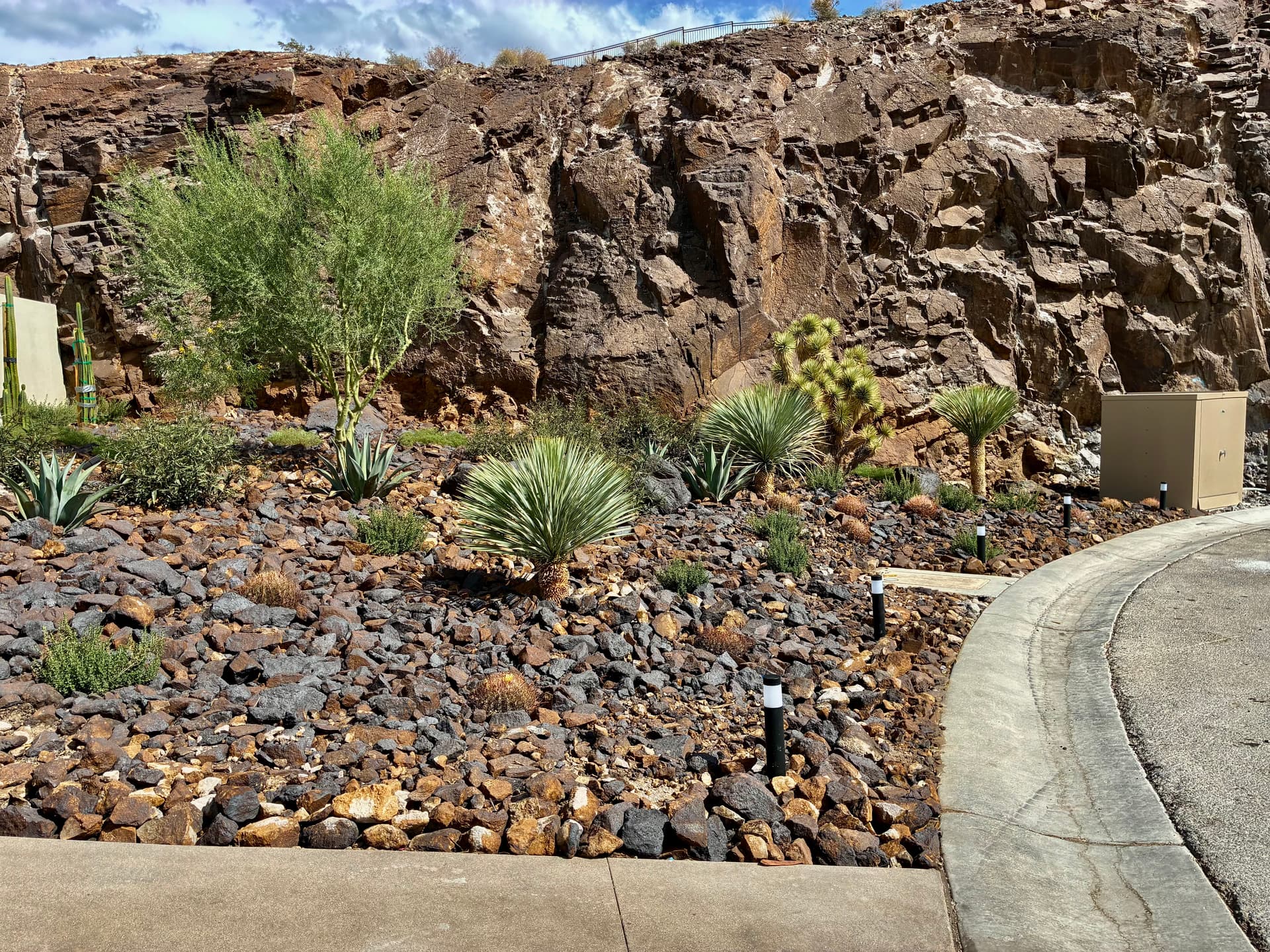
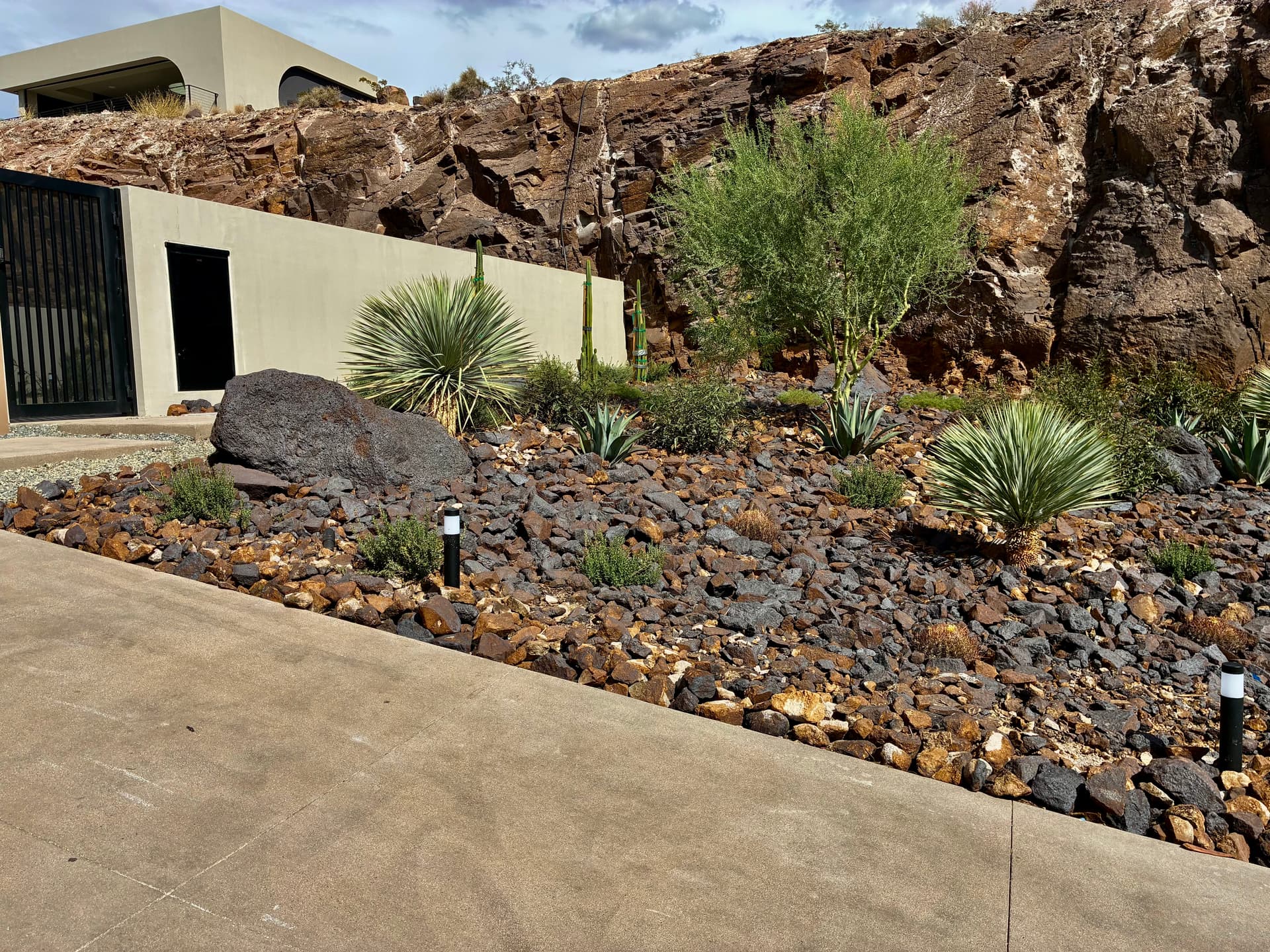
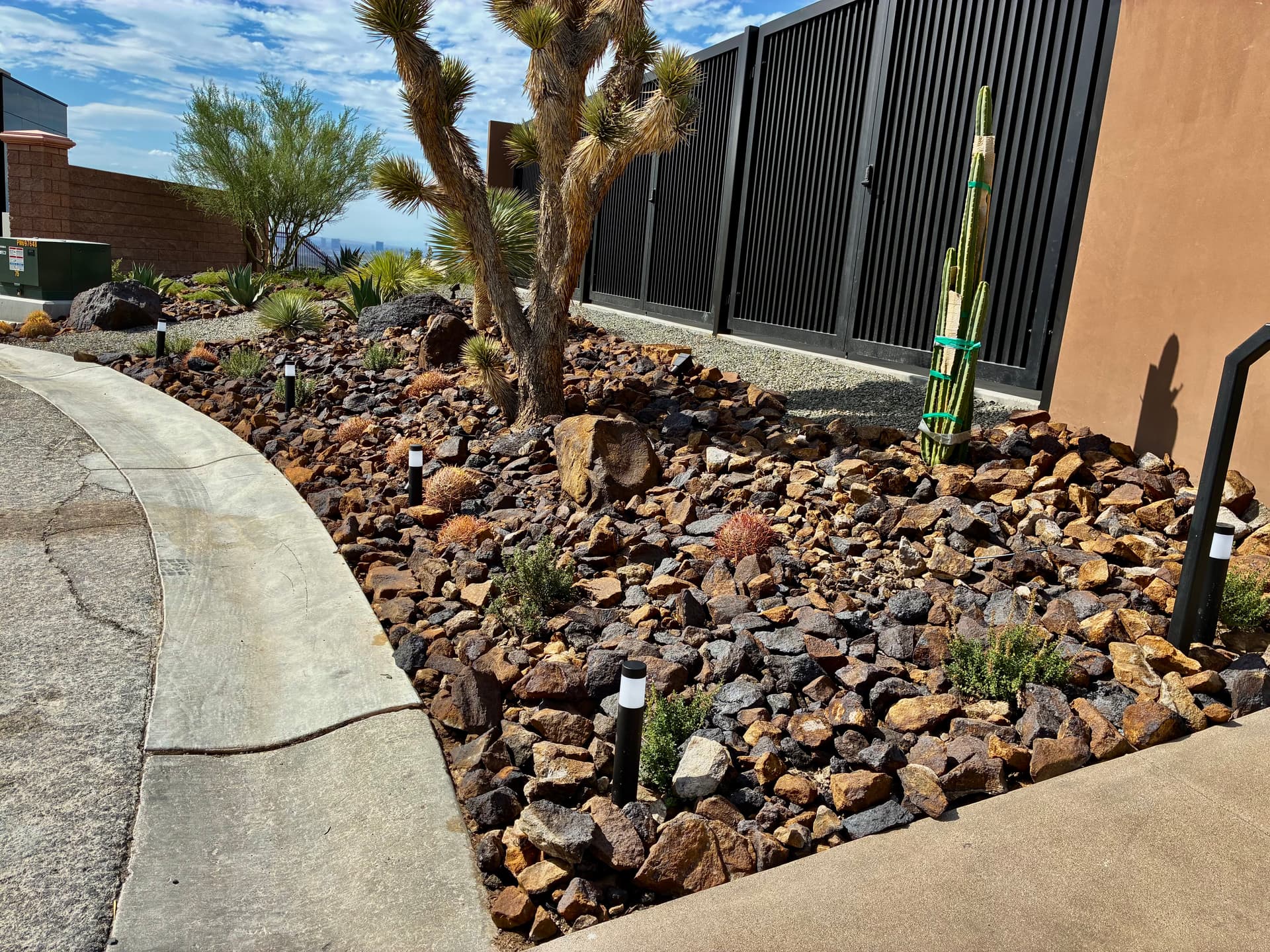
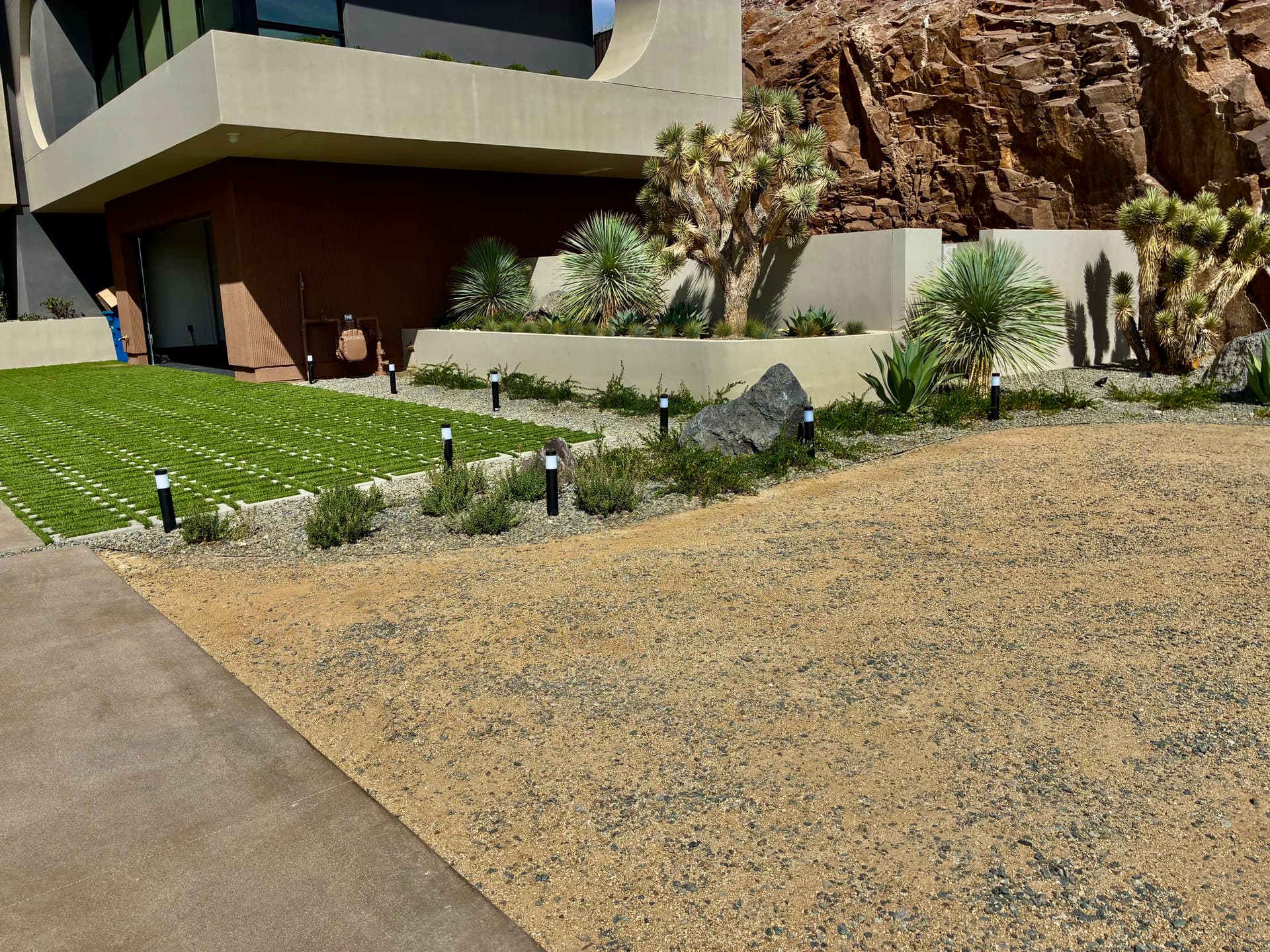
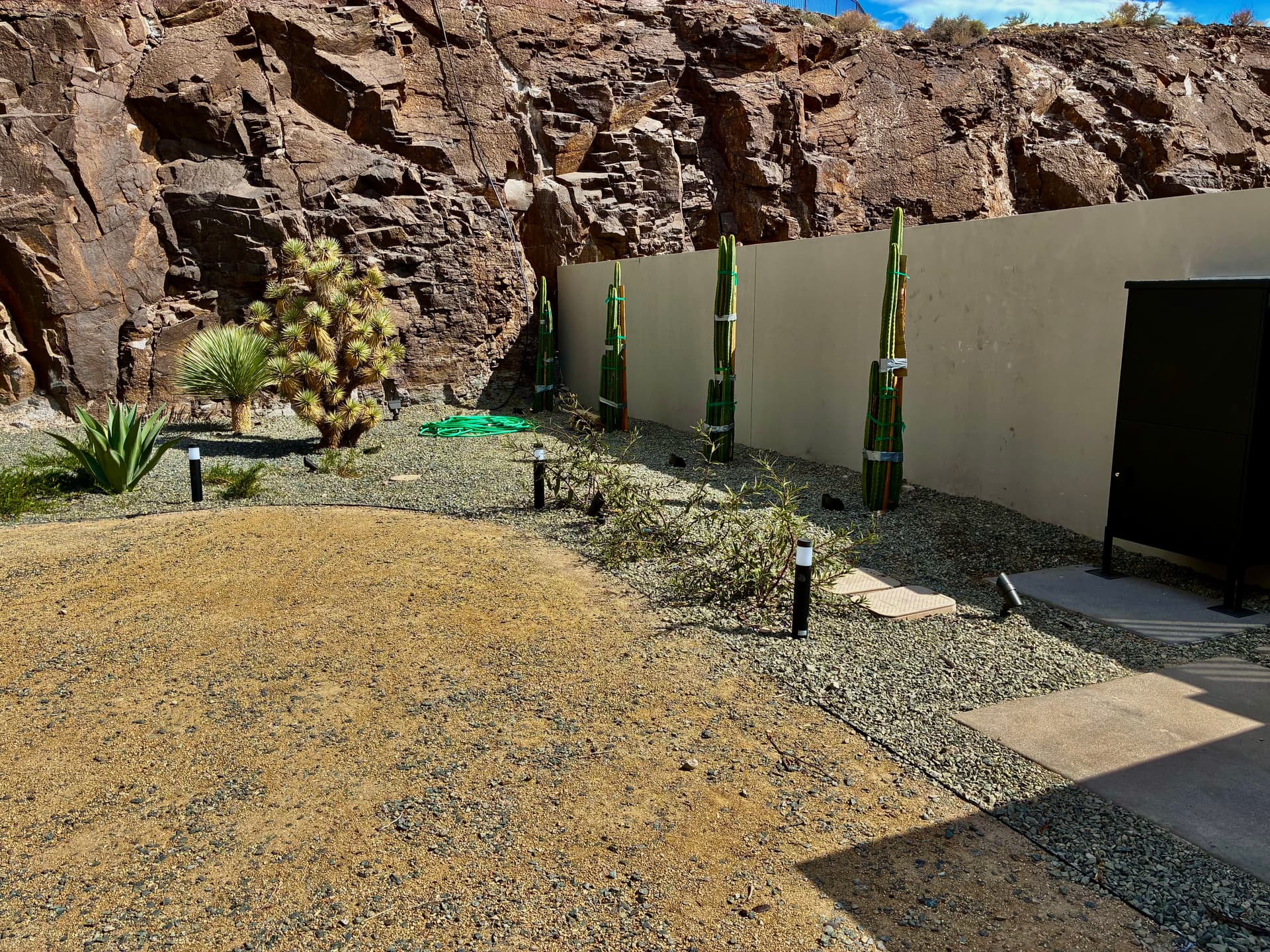
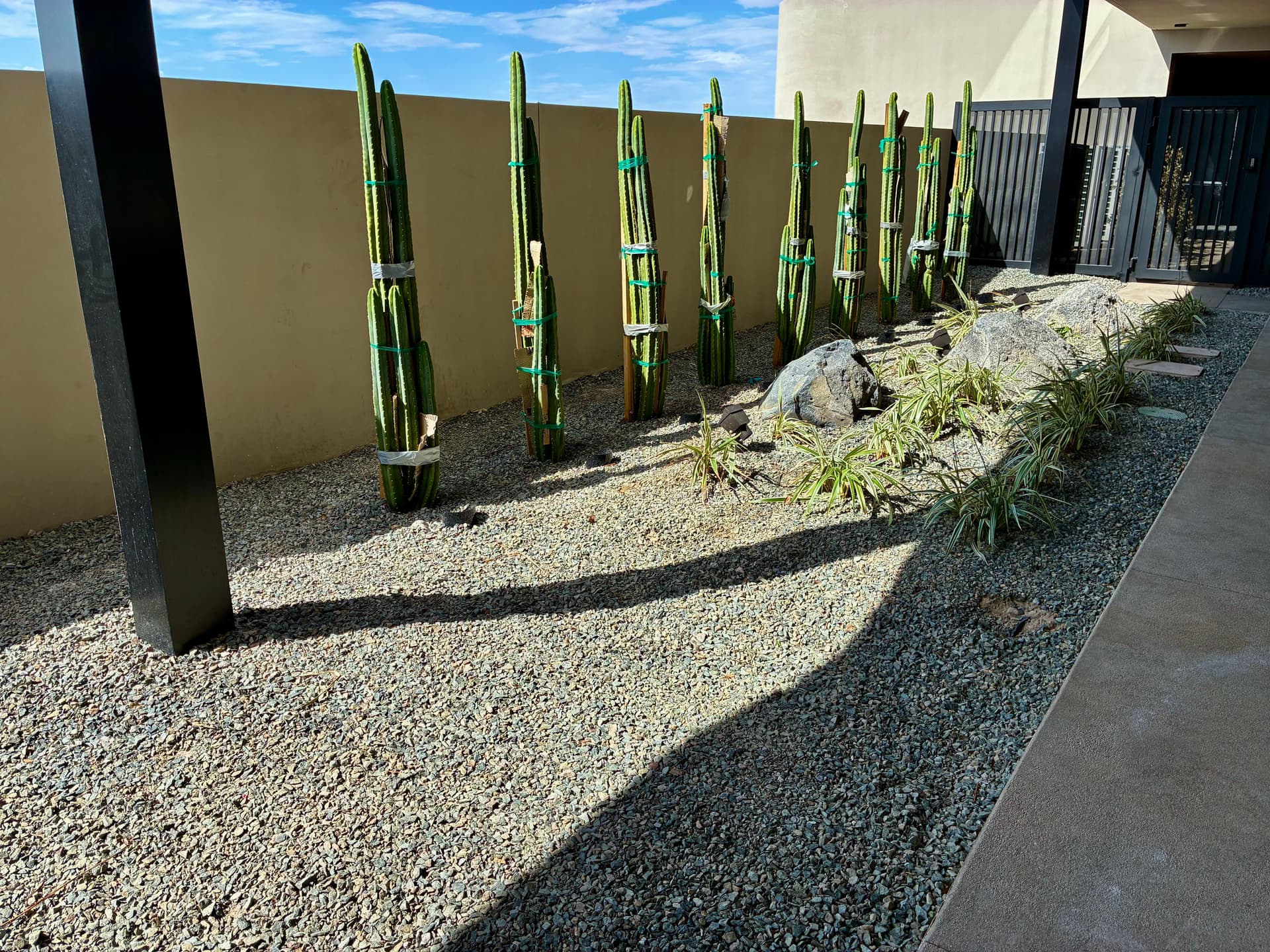
For this home, we started with the bones of the property and built from there. The front approach got a full desert planting - Joshua trees, columnar cacti, yuccas, agaves, and low-growing desert shrubs layered across a base of dark decomposed granite and natural boulders. Every plant was chosen with purpose. Nothing here needs babying. These are species that belong in this climate and will look sharp with minimal intervention.
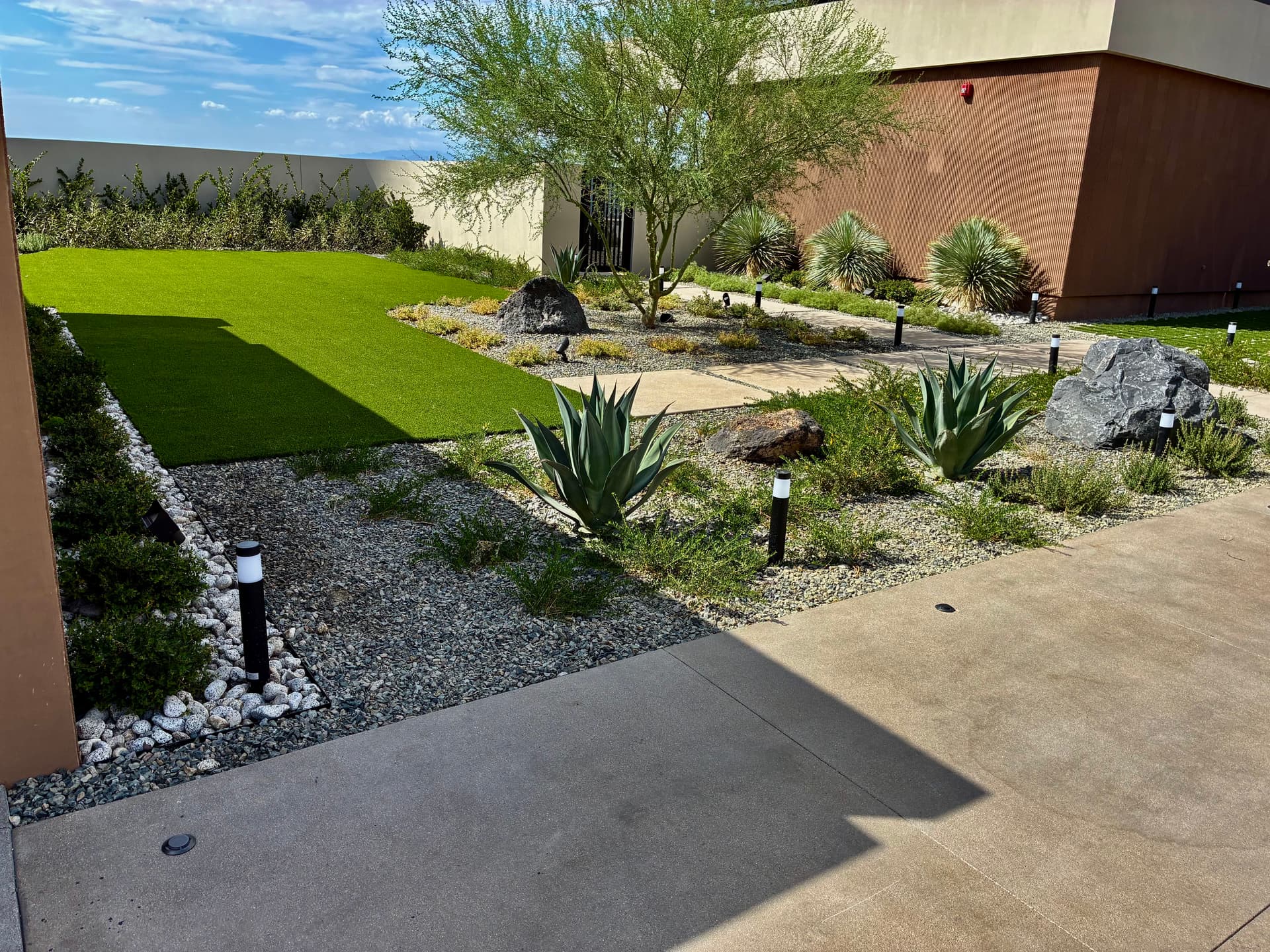
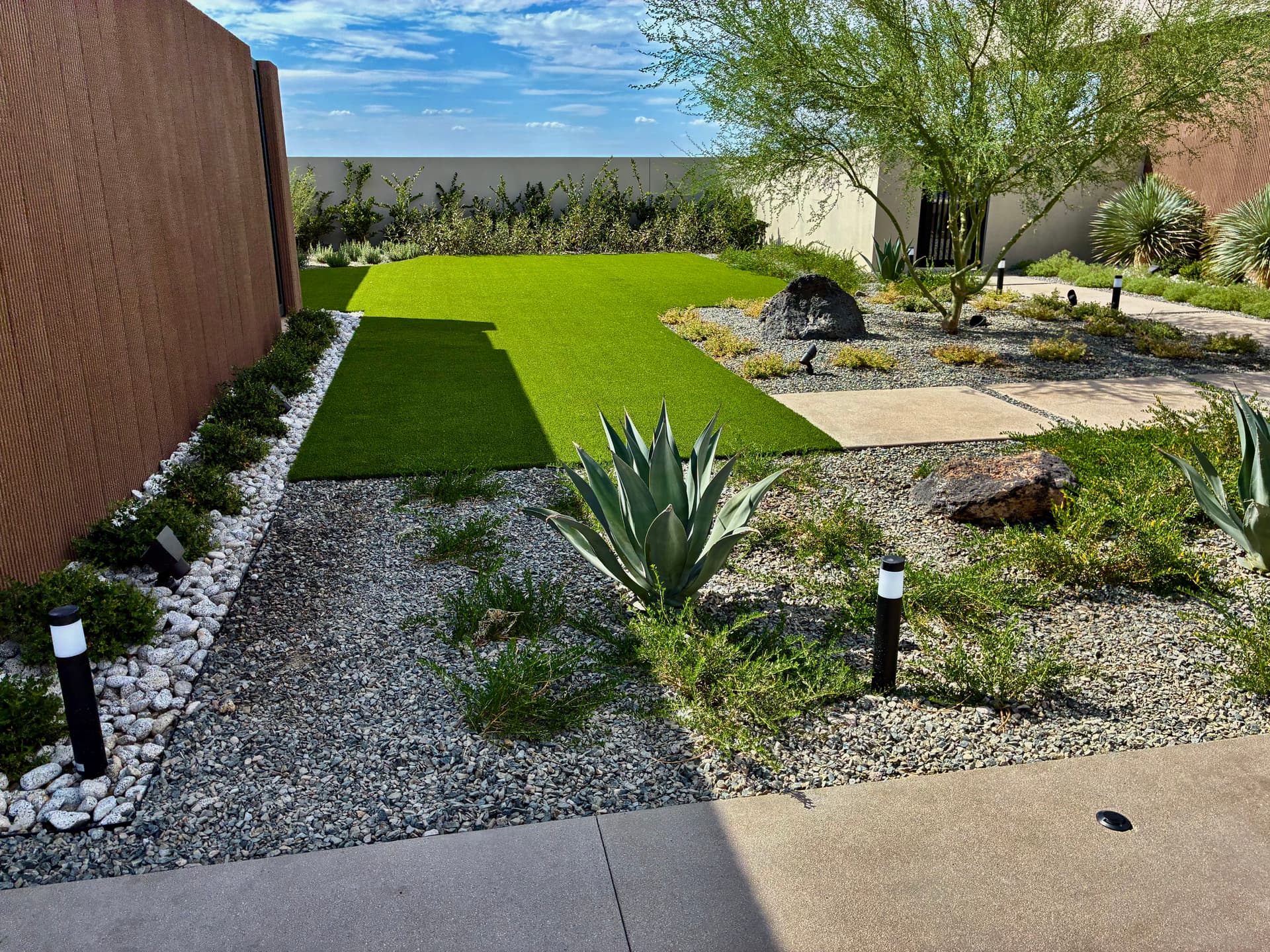
The backyard tells a slightly different story. We mixed artificial turf with crushed gravel, stepping stones, and accent plantings to give this space some versatility - clean lines without feeling sterile. The contrast between the lush turf panel and the surrounding desert-style gravel beds is exactly the kind of detail that makes a design feel intentional rather than pieced together.
Lighting was woven throughout the entire property. Low-profile bollard fixtures line the driveways and pathways, and uplights were positioned to hit the architectural plants and structure at night. Good landscape lighting isn't just about visibility - it's about making a property look as good at 9 PM as it does at noon. That's something we think about from the start of every design, not as an afterthought.
Desert landscape design done right is about working with the environment, not against it. The plants, the rock, the lighting - all of it should feel like it belongs where it sits. That's the standard we hold ourselves to on every job, whether it's a front entry or a full property buildout like this one.